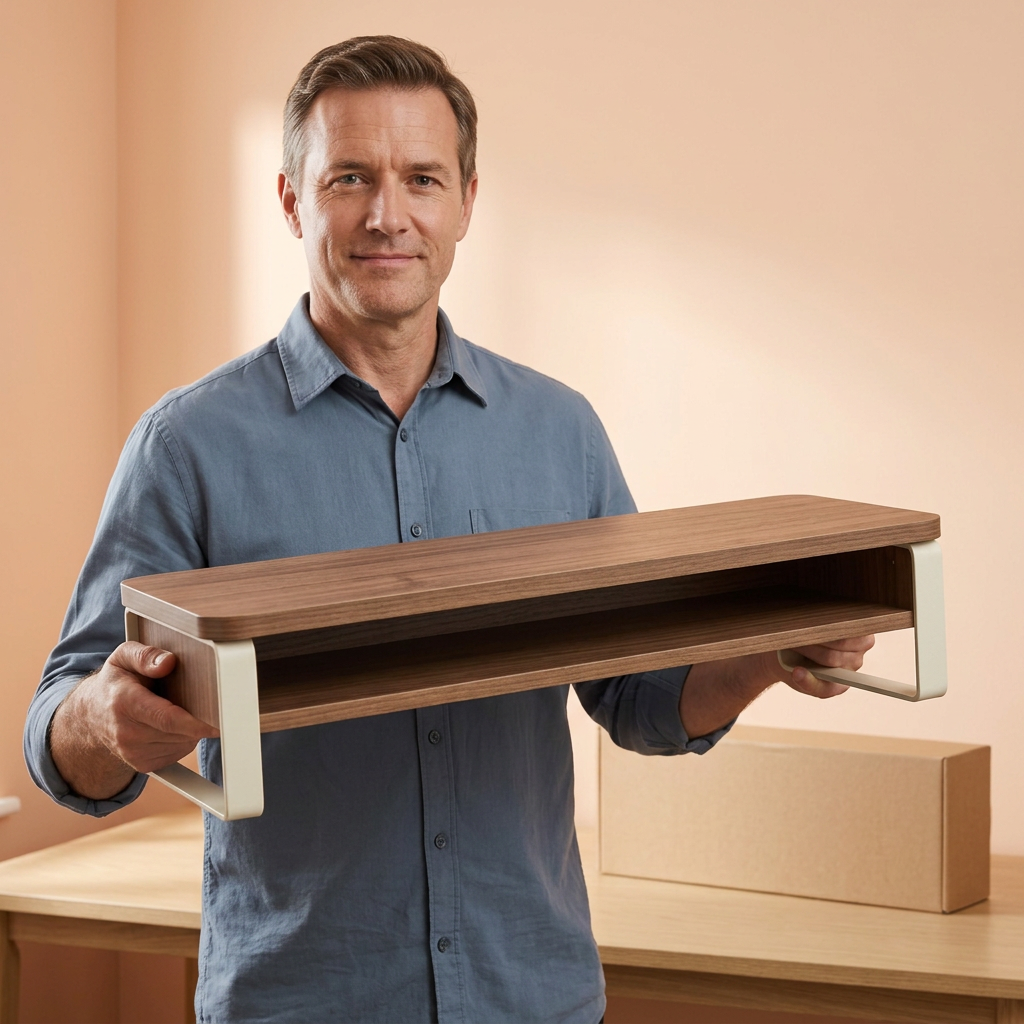
Walnut Woodgrain-Look Monitor Riser with Ivory Frame & Open Storage Cubby for a Layered, Organized Desktop
Walnut Woodgrain-Look Monitor Riser with Ivory Frame & Open Storage Cubby for a Layered, Organized Desktop
Made in the USA
Made to meet high U.S. quality standards.
Fast & Reliable Shipping
Ships within 24 hours with tracking updates.
180-Day Money-Back Guarantee
Not satisfied? Get a full refund within 180 days.
Visible Anti-Aging Benefits
Helps Reduce Wrinkles, Fine Lines & Puffiness
Gentle on Skin
Designed for a comfortable skincare experience.
Fast, Lasting Results
See visible results in as little as 7 days.
Couldn't load pickup availability

Product development draft: Images are AI-generated concept visuals. Materials, measurements, load capacity, assembly method, internal clearance, finish and package contents must be verified against a physical sample before publication. Walnut describes the proposed woodgrain appearance, not a confirmed timber species or solid-wood construction.
🪵 A Desk, Designed in Layers
A flat desk asks everything to share the same surface: the monitor, the keyboard, the notebook and the small objects that appear throughout a working day. This monitor riser concept introduces a different arrangement. A long woodgrain-look top creates an upper level, while an open-front cubby defines a separate place below.
The design pairs warm walnut-colored grain with ivory loop-shaped end frames. It is a small architectural gesture for the desktop: a horizontal line, a framed opening and a contrast between rich brown and pale cream. Rather than adding lots of compartments, it proposes one broad storage area that you can arrange around the equipment you actually own.
The Layout Guide
Upper Zone / Give the Screen Its Own Position
The top panel is shown as a long rectangular surface with softened corners. In the lifestyle scene, a single monitor sits near its center, leaving the woodgrain visible to either side. This is an illustration of the intended use, not confirmation that a particular monitor weight or base will fit.
Before using the finished product, the entire monitor base must fit within the approved supporting surface and the combined load must remain within the verified rating. Compare footprint measurements, not just the screen diagonal. A wide display with a small pedestal and a smaller display with a deep stand can require very different amounts of shelf space.
Middle Zone / Keep Useful Things Visible
The open cubby is formed by the top, a lower shelf and woodgrain-look side panels. Its wide front opening offers a visual alternative to a closed drawer. You can see what is stored there without pulling out a handle or opening a lid, making it a possible home for compatible desk accessories or a slim notebook.
A keyboard is shown in the detail imagery as a storage idea. Whether yours fits depends on its overall width, depth and height, including any raised keys, wrist rest or cable connection. The image is not a universal keyboard-fit guarantee. Confirm the actual internal clearance before planning the cubby around an existing device.
Front Zone / Leave Room for the Work in Progress
A shelf is most useful when the surrounding desk still functions comfortably. Keep enough room in front for your normal keyboard and mouse movements, or for a notebook opened to a full spread. Moving objects upward does not remove the riser's footprint, so planning the remaining work area matters as much as selecting the shelf itself.
Think of the proposed layout as three distinct places: equipment above, selected items in the cubby, and the active task in front. You do not need to fill every available space. Leaving one part clear can make the overall arrangement feel more intentional.
📐 The Design Details That Define the Look
The top's softened corners reduce the visual sharpness of the long horizontal silhouette. The grain-like pattern runs across the broad surfaces, introducing a warmer texture alongside the smooth appearance of the ivory frames. The lower shelf repeats the horizontal line of the top and creates a shadowed storage opening between them.
At each end, an ivory rectangular loop extends down to the desktop. The frames outline the riser rather than hiding its side profile, giving the concept a lighter appearance than a fully enclosed box. Their proposed metal-look finish is a visual direction only; the actual frame composition, coating, contact points and fastening method must come from the supplier specification.
The product shown is a fixed-height shelf concept. No height adjustment, rotating base, charging port, cable channel or drawer is included in the proposed design. Those features should not be inferred from the term monitor riser.
Choose the Mood Around It
Warm and Quiet
Pair the walnut-toned surface with an ivory desk accessory, a cream notebook and a pale wood desktop. Let the darker grain provide the main contrast. This arrangement keeps the shelf visually connected to the rest of the room without requiring every piece of furniture to match.
Colorful and Creative
Use the brown-and-ivory structure as a grounded backdrop for teal, coral and lavender accents. A colorful keyboard or desk mat can sit in front while the riser's long top keeps the composition ordered. The product images explore this direction without treating the illustrated accessories as part of the purchase.
Simple and Equipment-Focused
With a dark monitor and restrained peripherals, the pale frame helps separate the equipment from the desk beneath it. Keep the cubby reserved for a small number of useful objects rather than making it another place for an unplanned pile.
A Small Studio, Reconsidered
Picture a compact workspace where the screen and loose notebooks have gradually taken over the same area. Instead of adding another container, you begin by sorting what needs to remain within reach. A compatible monitor takes the upper level. A slim notebook moves into the open compartment. The front of the desk becomes the place for today's task again.
That is the idea behind this concept: not a promise of more square footage, but a clearer division of the space already there. The shelf still occupies a real footprint, and its value depends on whether the new arrangement suits your equipment and habits.
🗂️ Measure the Arrangement Before Making It Permanent
- Confirm the assembled width, depth and height against your desk.
- Compare the monitor base footprint with the usable top surface.
- Check the verified load rating and approved load placement.
- Measure the cubby opening and usable internal depth for intended items.
- Allow access to monitor controls, cables and the rear of your workstation.
- Check whether the desk surface and final contact pads are compatible.
No specific measurements or weight limits are stated in this draft. The raised-screen scene does not establish improved posture, reduced strain or an ideal viewing height for every person. Evaluate the complete workstation, including your chair, desk and display, rather than relying on the riser alone.
From the Box to the Desk
The proposed package contains one monitor riser in the walnut woodgrain-look and ivory color combination, packed in a plain unprinted kraft box without a logo. The images show an assembled concept, but do not establish whether the final product will arrive assembled or require fitting the frame and panels together.
Assembly hardware, tools, instructions and protective pads must be checked against the actual packing list. Monitors, keyboards, mice, plants, cups and notebooks shown in the images are styling props, not included accessories. Do not use the riser as a seat, step or support for a person.
Finish the Story with Verified Details
Before launch, confirm the panel substrate, woodgrain finish type, frame material, assembly guidance, tested load, dimensional tolerances and care instructions. Do not describe the surface as solid walnut, waterproof, heat-resistant or scratch-proof without evidence. A woodgrain appearance is a design choice; performance claims need their own verification.
A thoughtfully arranged desk can have warmth as well as structure. This concept brings both into one long, simple form: a place above, a place within and room in front for the work that matters today.